
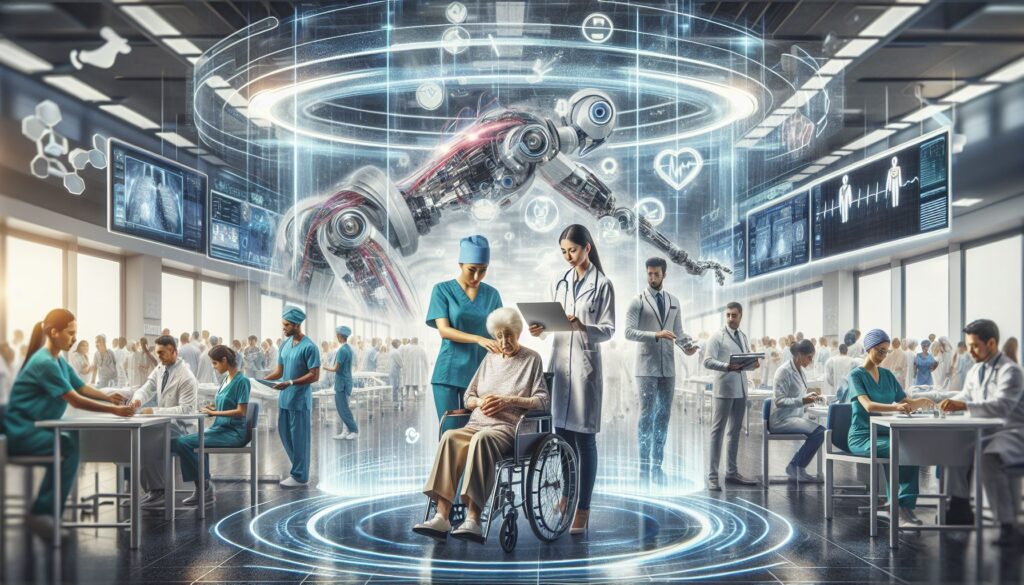
The healthcare industry today stands at the cusp of a technological revolution, destined to redefine how care is delivered, managed, and experienced. Sitting on the pedestal of modern ingenuity, the marriage of healthcare and technology has given birth to a plethora of innovations that go beyond mere theoretical aspirations – they are tangible victories in the quest for enhancing patient outcomes and streamlining caregivers’ workflows.
A Glimpse into the Impact of Technological Innovations
In the past two decades, technological advancements have significantly transformed the health landscape. According to industry reports, global spending on digital health is expected to surpass $210 billion by 2025, revealing a growing acknowledgment of technology’s pivotal role in patient care. Additional statistics shed light on a fascinating trend: Telemedicine alone saw a 38-fold increase in usage compared to pre-pandemic baseline levels. The message is clear – technological innovations in healthcare are well underway and spreading at an unprecedented pace.
Redefining Diagnostic Accuracy and Speed
Imagine stepping into a healthcare facility where a diagnosis is established in minutes rather than hours or days. This is the promise held by artificial intelligence (AI) in diagnostics. AI algorithms, trained on vast datasets, are complementing and, in some instances, surpassing the expertise of human practitioners, particularly in areas such as imaging and pathology.
Furthermore, technologies such as machine learning and big data analytics have propelled us toward precision medicine, where treatments and prevention strategies can be tailored to individual patient genetic profiles. The breathtaking granularity of such personalized care forecasts more effective treatment plans, fewer side effects, and improved outcomes.
Embracing the Digital Era with Electronic Health Records
Gone are the days of cumbersome paper records – Electronic Health Records (EHR) have taken center stage, allowing for seamless sharing of patient information across different healthcare settings. EHRs do not just serve as digital repositories of patient data; they also integrate disparate elements of healthcare information systems, ensuring that caregivers make well-informed decisions based on comprehensive patient histories, thus improving the quality and safety of care.
Telemedicine: Care Beyond Borders
Barriers of distance melt away with telemedicine, bringing medical consultation to the screen in the comfort of one’s home. Beyond just rural populations, the urban demographic, with their hectic schedules, also find value in this modality. The pandemic triggered widespread adoption of telehealth, revealing its potential to sustain healthcare delivery even in the throes of a global crisis – a testament to its resilience and versatility.
Wearables and Remote Monitoring: A Step Closer to Patients
Wearable health technologies have become the new barometers of personal wellness. Devices like smartwatches, activity trackers, and heart rate monitors continuously collect vital health data – activity levels, sleep patterns, blood pressure, and glucose levels – that was unattainable on such a scale in the recent past. When synced with mobile health (mHealth) applications, this data empowers users with actionable insights into their health while enabling remote patient monitoring for clinicians, thus bridging the chasm between episodic and continuous care.
Data Security and Cybersecurity: Safeguarding Confidentiality
As healthcare systems become increasingly interconnected and reliant on digital data, protecting this information against unauthorized access and cyber threats is paramount. Investment in cybersecurity measures is not just a legal compliance requirement but an ethical obligation to patients. Efforts to secure personal health information through powerful encryption methods, secure data storage solutions, and comprehensive employee training on privacy practices are central to sustaining the trust that forms the cornerstone of healthcare delivery.
Transforming Surgical Procedures with Robotics and AR/VR
The operating room is witnessing perhaps one of the most dramatic technological makeovers. Robotic surgery, equipped with high-precision instruments controlled by surgeons, offers greater control, flexibility, and visualization during complex procedures. Complementing these innovations are Augmented Reality (AR) and Virtual Reality (VR), which allow surgeons to rehearse complicated surgeries or provide real-time, 3D visualizations during surgery – enhancing precision and improving patient outcomes.
Blockchain Technology: Establishing Transparency and Traceability
Emergent technologies like blockchain have the potential to radically alter how healthcare records are managed and shared. Blockchain’s inherent decentralization ensures the integrity of each digital transaction present within health records. A system built upon blockchain can offer transparency, reduce fraud, and enable a patient-driven model where individuals exert more control over their health information.
Empowering Self-management Through Mobile Applications
A multitude of mHealth applications lay the world of medicine at one’s fingertips, offering instant access to personal health data, medication reminders, or even peer support through community features. Synchronous interaction with these applications can help drive better health behaviors by fostering consistent engagement with wellness goals and treatment regimens.
Advancing Stem Cell and Gene Therapy
Cutting-edge treatments such as stem cell therapy and gene editing techniques like CRISPR hint at a future where regenerating injured tissue or correcting genetic anomalies could be the standard of care for numerous diseases. While still in more formative stages, these avenues are unshackling our therapeutic potential and leading us towards conquering previously untreatable conditions.
The Statistical Landscape: A Mirror of Progress
The ripple effects of these innovations are mirrored in impactful statistics that tell a remarkable story of progress. Clinical research demonstrates that AI could reduce false-positive findings in cancer screenings by up to 5.7%. A case study involving robotic-assisted surgeries showed a 21% reduction in a patient’s hospital stay. Investment in mobile health is projected to reach $189 billion by 2025, signaling the sector’s expanding footprint in preventive and managed care.
Beyond Innovation: Ethics, Accessibility, and Continuous Education
As prowess in high technology serves humanity’s noblest causes, vigilance regarding its ethical usage becomes indispensable. Ensuring equitable access to these innovations, upholding patient privacy, and navigating moral conundrums like AI decision-making autonomy must keep pace with the advancement of technologies. Additionally, investment in the continuous education of healthcare providers ensures that they stay abreast of these rapidly evolving tools, ultimately benefiting patient care.
Conclusion: Envisioning a New Epoch of Healthcare
Amazement at the inexorable march of technology in healthcare is only matched by the excitement of its unimaginable transformative power. Every keystroke, every line of code, and every microchip inching us closer to what was once mere fantasy – a world wherein healthcare is accessible, individualized, preventive, and remarkably less invasive. Nonetheless, while machines and software continue to empower healthcare, the human connection that lies at the heart of healing remains ever-valuable and irreplaceable.
Through embracing technological innovation responsibly and inclusively, the carte blanche to rewrite healthcare’s narrative continually lies ahead, imbued with possibilities that promise a more efficacious and more empathetic dawn for patient care.