
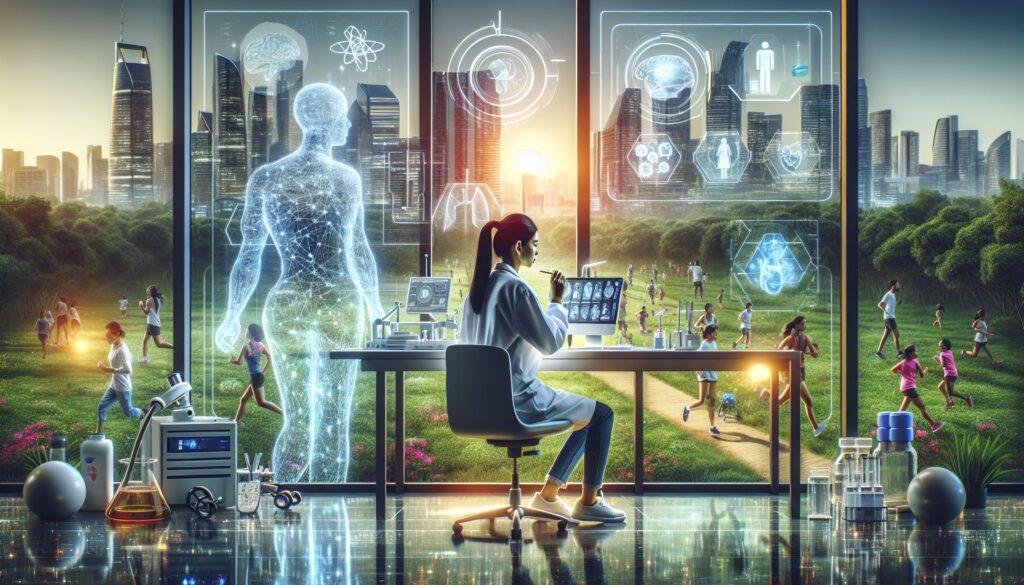
The healthcare industry is a rival entity when it comes to advancements and innovation. Fueled by necessity, technology, and the never-ceasing quest for betterment, this sector has witnessed game-changing inventions that once seemed like mere science fiction. In recent years, you’ve probably noticed the accelerated pace at which new healthcare solutions are introduced — from treatments that precision-target diseases to systems that enhance patient care and the doctor experience alike.
The Current Landscape: A Quick Look into the Now
With current statistics underscoring an aging population and an increased prevalence of chronic diseases across the globe, the pressure is on healthcare providers to evolve quickly and efficiently. According to a 2022 report by the World Health Organization, chronic diseases such as diabetes, heart disease, and cancer account for over 70% of all deaths worldwide, spotlighting the urgent need for innovations in healthcare that can tackle these challenges head-on. As you navigate these changes, understanding how innovations are reshaping the very core of healthcare is critical.
Bridging the Gap Between Patients and Advanced Care
Decentralizing Healthcare Delivery
One significant shift seen in the industry is the move toward de-centralizing healthcare delivery. Aiming to reduce the need for hospital visits and make healthcare more accessible, telemedicine, and home-based healthcare services have surged, especially in response to the COVID-19 pandemic conditions. Through digitally-enabled care, you can now consult with healthcare providers virtually, receive remote monitoring for chronic conditions, and achieve a level of accessibility that was previously unattainable for many.
Personalized Medicine’s Rise
Additionally, personalized medicine continues to revolutionize disease treatment and prevention. By integrating information about your genetic makeup or the molecular profile of your disease, treatments can be tailored to your individual needs. This field merges various branches of science and technology, including genomics, big data analysis, and AI, leading to targeted therapies, reduced adverse drug reactions, and more effective disease management.
Robotic Assistance and Surgery: The Precision of Care
The introduction of robotics into surgery has transformed what’s possible in operating theaters around the world. Picture surgical robots with steady, precise arms and the ability to reach places the human hand cannot with ease. The ability to carry out complex procedures is becoming narrower, thus increasing precision and reducing patient recovery time. Not only have they enhanced the success rates of surgeries, but they have also multiplied the capacity to train surgical professionals with highly realistic simulations, boosting the safety margin for patients tremendously.
AI and Machine Learning: The Brain Behind the Data
An unignorable fact is the explosion of artificial intelligence (AI) and machine learning applications across the healthcare spectrum. AI-driven tools can analyze vast amounts of data—far beyond human capacity—to unearth patterns that can predict outcomes, optimize hospital operations, enable early disease detection, and lead to better clinical decision-making. One stark illustration of this is automated imaging analysis, where machine learning algorithms provide high-speed, detailed assessments that support radiologists in identifying anomalies faster and with increasingly sharper accuracy.
AI in Action
Consider the case of an AI-powered chatbot that can ask you preliminary health-related questions, much like a digital triage nurse. Before even stepping into a doctor’s office, you’re supported by technology that’s been calibrated with millions of data points. AI is enriching patient-provider interactions, making healthcare more efficient and predictive, steering away from the reactive nature of past decades.
Wearables and IoT: Health Monitoring Redefined
Get a sense of the revolution in health monitoring as wearables and the Internet of Things (IoT) make monolithic incursions into daily living. Whether it’s a smartwatch notifying you of an abnormal heart rhythm, a smart patch measuring your blood glucose without needles, or a fitness tracker urging you to stay active – the hard lines between technology and healthcare are blurring. These devices collect health data continuously, allowing for real-life, time-sensitive snapshots of well-being. They empower proactive health management unlike ever before, personalizing the healthcare journey for every user.
Technology on the Frontline: Statistical Insights into Digital Adoption
Checking the pulse on the adoption of digital innovation in healthcare reveals telling numbers. According to data from Statista, health-related mobile app downloads surged by 50% worldwide during the first quarter of 2020 compared to the previous year, showcasing the rapid embrace of mobile health interventions.
Even more indicative of technology’s permeation is the widespread use of electronic health records (EHRs). A report by the Office of the National Coordinator for Health Information Technology highlights that as of 2021, 89% of office-based physicians had adopted an EHR system, which stories a marked evolution from a mere 18% in 2001.
Pioneers Shaping the New Horizon
Highlighting the human capital driving this evolution brings deserved recognition of pioneers who continually push the envelope in healthcare innovation. These figures often stem from diverse backgrounds — ranging from medicine, engineering, data science, to entrepreneurship — blending their expertise to summon novel solutions to age-old medical challenges.
Men and women alike devote their careers to unearthing breakthroughs that may disrupt the status quo and render some aspects of traditional healthcare obsolete. Case in point, consider how the young entrepreneurs behind a tech startup can devise an app that cheaply, easily, and accurately detects skin cancer with a scan from a smartphone’s camera. Sweeping achievements in precision medicine, AI, and beyond can often trace their roots back to innovative people in all healthcare domains.
In Conclusion: Charting the Healthier Path Forward
The chemistry between technological advances and human ingenuity perpetually concocts an improved healthcare landscape. From expanding reach and revolutionizing patient experience to reshaping preventative care and disease treatment, embracing innovations in healthcare foregrounds a healthier society. As you witness these changes, take part actively, stay informed and be prepared to adapt to the continuous transformative shift in the world of health and wellbeing. Are you ready to be a protagonist in this burgeoning era of healthcare? The future is unfolding now, and it’s teeming with possibilities that beckon valiantly.