
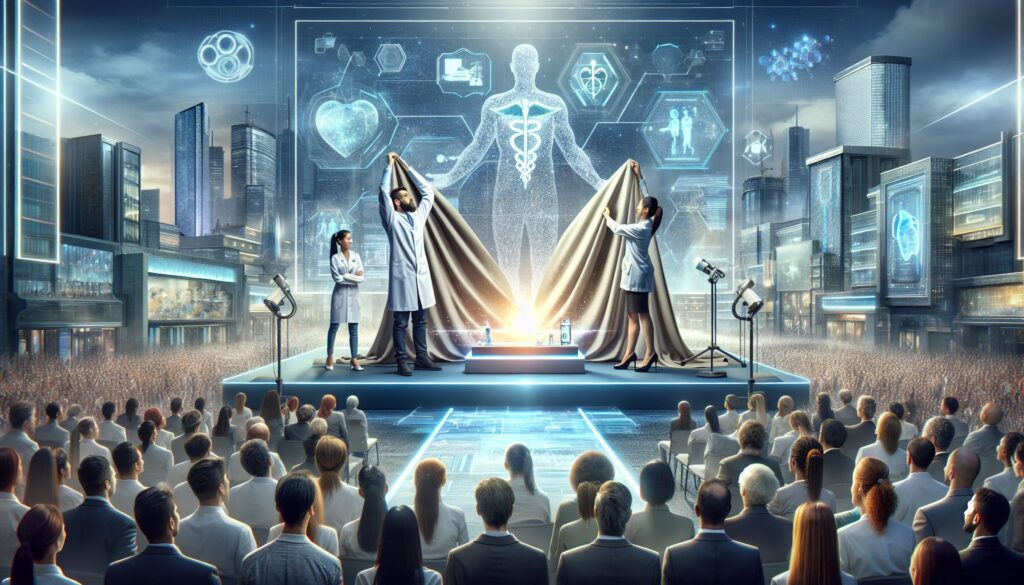
The ever-evolving domain of healthcare stands at a fascinating intersection between tradition and innovation, where established practices are constantly being reimagined through the lens of modern technology. You find yourself living through a remarkable epoch where advancements are transforming patient care, redefining possibilities, and enabling doctors to leapfrog barriers that were once considered insurmountable. This revolution isn’t merely a pipeline of potential; it represents tangible improvements in wellbeing and longevity across the globe.
Leading the Charge: Technological Breakthroughs
Have you ever pondered how quickly healthcare evolves with each passing year? To equip you with a sense of perspective — recent data unveiled that the digital health market is projected to exceed a value of $379 billion by 2024, surging at a compound annual growth rate of 25%. These statistics are emblematic of the prolific expansion in this arena, highlighting how health tech is becoming increasingly central to medical ecosystems all over the world.
Personalized Medicine: The Age of Tailor-Made Treatments
Gone are the days of one-size-fits-all. The contemporary tale of healthcare is being rewritten by the idea of personalized medicine. This involves the use of genetic or other biomarker information to tailor treatments specifically to your individual characteristics.
For instance, pharmacogenomics, a field where drug therapies are optimized according to each person’s genetic makeup, has profoundly amplified the efficacy and safety of treatments. This pivotal innovation dramatically decreases the trial-and-error period of determining the right drug and dosage, facilitating more successful patient outcomes.
Digital Health Records: Power at Your Fingertips
Tap your smartphone screen, and discover a world where wearable technology and digital health services allow seamless monitoring of vital statistics in real-time. Imagine the practicality of managing electronic health records (EHRs) that galvanize improved coordination among healthcare providers, fostering a more holistic and efficient approach to healthcare delivery.
The implementation of AI and machine learning in managing and analyzing health data has fortified the efficiency and accuracy in diagnosing diseases, predicting outbreaks, and personalizing patient care plans.
Robotics and Automation: Beyond Human Capabilities
Consider the remarkable prowess of robotics and automation, where surgeries, earlier grappled by the limitations of human hands, are now wielded with robotic precision that extends beyond human capability. These robots assist in surgeries through minimally invasive procedures, ensuring reduced recovery time and decreased risk of complications.
Furthermore, robotic automation aids pharmacies in dispensing medication and managing inventory, doctors in scheduling appointments, and patients in reminding them to adhere to their treatments, some of which have shown significant decreases in human error rates.
Empowering the Masses: Access and Affordability
Equally consequential to healthcare advancements are efforts to ensure their accessibility to a broader audience. Health technology is bridging gaps for rural and underserved populations by delivering remote consultations through telehealth services. On the economic front, advancements in healthcare technology play a crucial role in aiding the reduction of expenditures by predicting patient admissions and preventing hospital re-admissions through proactive monitoring and intervention.
Remote Sensing and Telehealth: Healthcare Without Barriers
Also of note is how remote sensing and telehealth have stepped into the limelight, particularly intensified by the global COVID-19 pandemic. Individuals in remote or inaccessible regions now have at their disposal the means to consult with specialists miles away through telemedicine—defying geographical barriers.
3D Printing: Medical Equipment on Demand
Beyond mere consultation, consider as well the impact of 3D printing, which is empowering medical professionals everywhere to manufacture customized devices, prosthetics, and even human tissues with an unprecedented pace and precision. Its ability to directly translate digital files into physical objects has significant implications for supply chains and delivery models in healthcare — making essential products available on-site, eliminating lengthy deliverer wait times, and reducing storage and transportation costs.
Real-Time Informatics: Data-Driven Insights that Save Lives
A fundamental player in this narrative of transformation is informatics; the harness of copious amounts of data translates into actionable insights capable of foretelling episodes of care before they unfold. The amalgamation of bioinformatics, health informatics, and even social informatics, converges to form a mélange of data that helps diagnose diseases earlier and with more precision. It heralds an era where interventions become proactive rather than reactive, and the management of chronic diseases becomes more anticipative.
Genetics and Biotechnology: Engineering the Future
Behold the world of genetics and biotechnology where engineering innovations have a substantial influence on healthcare. CRISPR technology epitomizes this, allowing medical scientists to edit genomes with groundbreaking accuracy. Such strides in genetic engineering invite not just therapeutic change but herald preventative methodologies that undercut the onset of genetic disorders.
Picture also the innovative creations within biotech, such as biocompatible materials for implants and immune-engineering techniques that revolutionize how organ transplantation and autoimmune diseases are approached.
The Human Catalysts: Leading Innovators in Healthcare
Behind each of these technological wonders is a phalanx of dedicated innovators—the trailblazers who envisage and bring to fruition the future of healthcare. It’s essential to laud figures like Dr. Robert Langer, whose contributions to biotechnology and the engineering of drug delivery systems have shaped modern pharmacotherapy. Elizabeth Holmes, despite later controversy, initially emerged as a luminary with her company’s attempt to simplify blood testing.
Do not forget startups and organizations, powered by inspired leaders, that charter novel pathways; companies like 23andMe with their pioneering personalized DNA testing kits or blunt innovators like Elon Musk enhancing neurotech capabilities with ventures such as Neuralink.
You stand at the threshold of a healthcare revolution, witnessing empowerment that arises through sensing tech that whispers pulse rates into smartphone apps, VR headsets diminishing children’s anxiety pre-surgery, or AI decipher datasets to detect diseases with astonishing acuity.
Conclusion: A Future of Endless Possibilities
In the realm of healthcare, once-understated whispers of innovation have burgeoned into a crescendo of progress that reverberates through the tunnels of medicine, altering the very framework of how health services are delivered, experienced, and improved upon. Driven by consumer demand, an aging population, escalating healthcare costs, and technological advancements, the only constant in healthcare is inexorable change.
As one delves deeper, you find at the marriage of technology and healthcare not a fleeting trend, but an enduring commitment to elevate human lives. It is with this spirit and these innovations decades—perhaps centuries—that complex healthcare challenges could meet breakthroughs to match, overcoming today’s medical conundrums for a healthier tomorrow.