
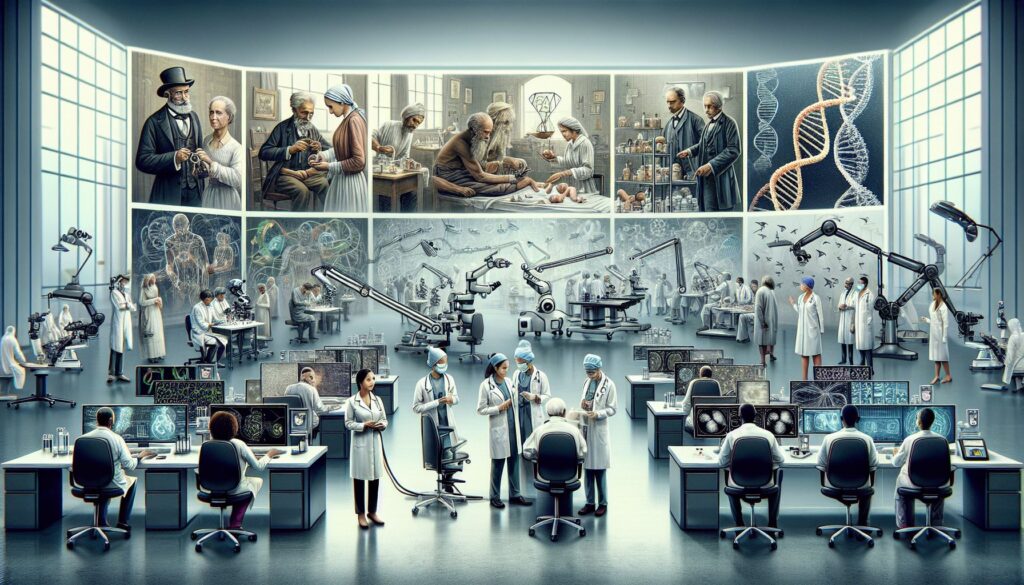
Introduction to the Future of Health
The healthcare industry, renowned for its blend of compassion and complexity, has been witness to a phenomenal transformation thanks to the relentless march of innovative technologies. These advancements promise to repaint the canvas of patient care, adding layers of precision, efficiency, and accessibility that were previously unthinkable. With a predicted compound annual growth rate (CAGR) of 5% between 2019 and 2023, the global healthcare market is booming, fueling further investments and developments in this critical sector.
The Vanguard of Medical Technologies
Imagine a world where a routine doctor’s visit not only encompasses a checkup but also a tailored prediction of potential health risks informed by genetic profiling. This world isn’t distant; it’s increasingly becoming the current landscape of healthcare, where innovations are setting the stage for a revolution in how health issues are predicted, diagnosed, and treated.
Digital Health Records: The Backbone of Modern Medicine
Electronic Health Records (EHRs) have become the backbone of modern healthcare. Terabytes of clinical data are now processed and shared with an efficiency that past paper-based systems could never achieve, considerably reducing medical errors and enhancing care coordination across different specialties.
The Rise of Telemedicine
Telemedicine has taken center stage, offering an unprecedented level of convenience. Patients can access medical advice without leaving the comfort of their homes, ensuring continuity in patient care regardless of physical constraints or global challenges, such as those experienced during the COVID-19 pandemic.
Artificial Intelligence: The New Medical Colleague
Artificial Intelligence (AI) has introduced capabilities ranging from early diagnoses to predictive analytics, drastically changing the landscape of potential treatments. AI-powered algorithms sift through mountains of data to unearth invaluable insights, perhaps identifying the early stages of diseases like cancer or Alzheimer’s years before traditional methods.
Wearable Technology: A Pulse on Health Metrics
Wearable technology is leaping from counting steps to monitoring heart rhythms and blood glucose levels. By enabling continued monitoring, these devices offer a constant stream of health data, facilitatingswift interventions when anomalies are detected, and helping to manage chronic conditions with greater finesse.
Medical Robotics: Precision and Perfection
Robots are not just industrial tools; they have extended their AI-driven precision to the operating room. Surgical robots facilitate complex surgeries with a level of precision and control that surpasses human ability, potentially reducing the risk of complications and shortening recovery times.
Gene Editing: A Controversy with Potential
A particularly controversial yet potentially life-changing innovation is CRISPR-Cas9 gene editing. This technology presents an unprecedented ability to alter DNA sequences and modify gene function with hopes of addressing genetic defects before they manifest into full-blown disorders.
The Role of Statistic in Healthcare Innovation
Harnessing valuable insights from vast data sets is crucial in healthcare. In the spirit of understanding this trend through the lens of statistics…
- 78% of healthcare providers believe digital health tools are integral in facilitating patient engagement, according to a 2020 survey.
- The global telemedicine market is projected to reach USD 185.66 billion by 2026, as per a 2020 Fortune Business Insights report, indicating a surging preference for remote healthcare options.
- Investment in AI in the healthcare market was estimated to hit about USD 6.6 billion+ in 2021, with a predicted growth rate of approx. 40% through 2021 according to a report from Accenture.
These onslaughts of numerical affirmations bolster the narrative that technology is no longer an accessory in healthcare but a fundamental harness driving meaningful progress.
Possibilities and Pitfalls
An inclusive examination of this technologically generative wave must expose the undeniable dichotomy of opportunities and challenges it presents.
Bridging the Gap or Widening it?
The digital divide raises concerns. Innovations are incredibly impactful, yet their benefits are unevenly distributed. Population subsets that are socioeconomically disadvantaged may find themselves further alienated, exacerbating health disparities rather than diminishing them—a concern that needs to be addressed through policies and communal efforts.
Security and Privacy at A Crossroads
With immense data comes immense responsibility. As health information becomes more digital, the specter of privacy breaches and data theft looms ever larger. The intertwining of personal health data and technology demands robust cybersecurity measures and ethical considerations that are invariably an on-going process.
The Regulatory Hurdles
Medical innovation inevitably precedes regulation. Governing bodies strive to establish frameworks that protect patients while enabling innovations to flourish; however, this often leads to a painstakingly slow process, temporarily stalling promising advancements.
Nurturing the Seeds of Change
While technology has cast an illuminating light upon medicine’s stage, fostering the impending transformation requires just as much human insight as it does analytical precision.
Educating Healthcare Professionals
Continual education is imperative for health professionals to keep pace with rapidly evolving technologies. Enhanced training modules and interdisciplinary collaboration can mitigate the knowledge gap and incentivize an innovative mindset.
Patient Engagement and Literacy
Hand-in-hand with professionals’ education goes patient literacy. Informing the public and engaging them in their health through technology encourages involvement in preventive care and responsible use of medical innovations.
Collaboration: The Key to a Healthier Tomorrow
Healthcare, once a secluded dominion of individual disciplines, now necessitates collaborative partnerships extending across industry factions — tech companies, research institutions, patient advocacy groups, and more, need to converge, crafting a unified front for this new chapter in medicine.
Conclusion: A New Dawn Approaches
Innovation in healthcare offers the world a promising antidote to age-old afflictions as well as those we’ve only begun to challenge. As history pivots at this critical juncture, the profound cooperation between technology and humanity can ignite a new era of medicine that’s profoundly intelligent, exceptionally personal, and fervently hopeful. The evolution unfolding before us isn’t merely a technological marvel; it is the future of human well-being, a narrative you are essentially a part of — as a beneficiary, contributor, and steward. Embrace the incredible journey ahead.