
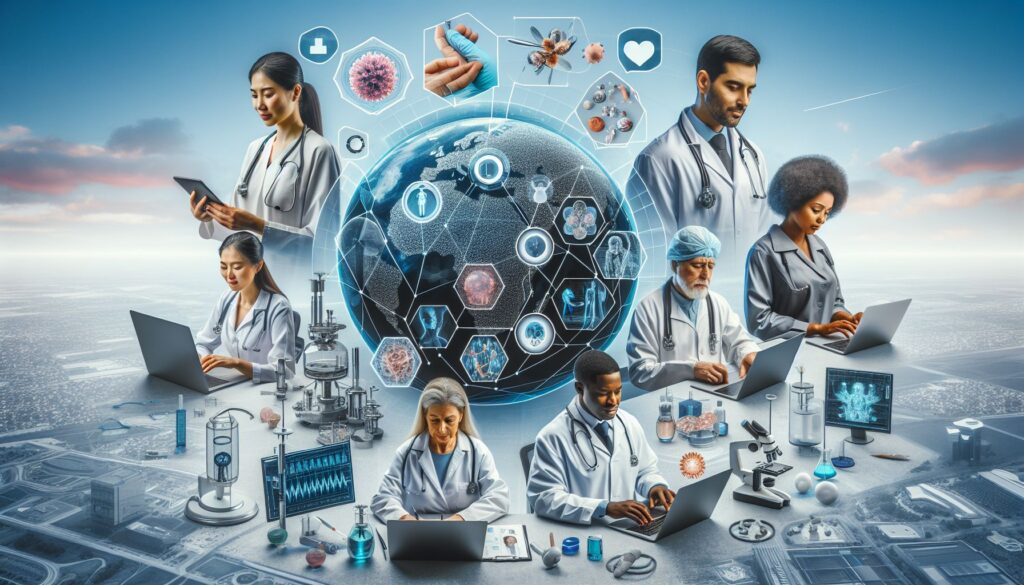
The landscape of healthcare is changing rapidly, with innovations transforming patient caare, diagnostics, treatments, and the entire healthcare experience. With technological advancements paving the way, the possibilities now extend far more than ever imagined. Whether it’s through groundbreaking treatments or cutting-edge diagnostic tools, these innovations hold the promise to save lives, improve quality of care, and reduce healthcare costs. Today, get set to explore some of the most remarkable innovations that are reshaping the world of healthcare.
The Digital Revolution in Diagnosis and Treatment
In recent years, the field of healthcare has been witnessing an unprecedented digital revolution. From telemedicine and electronic health records to AI-powered diagnostics, technology is making patient care more accurate, efficient, and accessible. For instance, wearable technology now allows continuous monitoring of chronic conditions outside hospital settings, fundamentally altering patient engagement with health and wellness.
AI and machine learning are arguably among the top transformative forces in medicine today. Artificial intelligence is enhancing diagnostic accuracy by interpreting complex medical data far beyond human capability. Algorithms are able to sift through millions of medical images to detect anomalies such as tumors at infancies otherwise unnoticed by the human eye.
Personalized Medicine: A New Era for Treatment and Care
One of the most extraordinary shifts within healthcare is the move towards personalized medicine. This approach involves using an individual’s genetic profile to guide decisions made about the prevention, diagnosis, and treatment of disease. Personalized medicine radically changes the one-size-fits-all approach, potentially increasing the efficacy of drugs as they can be tailored to a person’s genetic makeup. It also opens doors for highly individualistic treatment plans and preventive strategies.
Real-time Health Monitoring and Wearable Technology
At the heart of these advancements are innovations in the realm of real-time health monitoring. This technology utilizes various wearable devices that can track everything from heart rate and blood glucose levels to oxygen saturation and sleep patterns. Imagine being able to detect irregularities in your heartbeat instantaneously and preventing complications before they escalate. This immediacy in healthcare monitoring is not just convenient – it’s becoming increasingly life-saving.
Evidence-Based Innovations and Big Data: Improving Healthcare Decisions
With the increasing prominence of big data in healthcare, evidence-based innovations lead to more scientific allocations of resources and, ultimately, better patient outcomes. Big data analytics can predict epidemics, improve quality control, avoid preventable deaths, and stay a step ahead of disease outbreaks.
Virtual Reality and Augmented Reality in Treatment
The imaginative use of virtual reality (VR) and augmented reality (AR) technologies is crafting new realities for patients and healthcare professionals alike. VR is being used for training surgeons, planning complex surgeries, and even as therapy for post-traumatic stress disorder. AR overlays helpful data in real-time for professionals performing procedures and promises to make healthcare education more interactive and immersive.
Recent Pioneering Advances that Signal a Bright Future
Consider recent advances like CRISPR gene-editing technology, which has turned science fiction into reality, offering the potential to correct genetic defects and even eradicate certain diseases. Another marvel, 3D printing, now enables the bio-printing of tissues and organs for transplantation, cutting back ceaselessly long donor lists and significantly reducing the risk of organ rejection.
Beating the Odds: Relevant Statistics that Highlight Innovation Triumphs
In recent times, the impact of healthcare innovation has been nothing short of phenomenal. The field of big data in healthcare alone was valued at approximately $14.9 billion in 2018 and is projected to reach $68.75 billion by 2025. Making sense of vast quantities of data results in more optimal patient outcomes – a study found that healthcare data analytics can reduce annual healthcare costs by up to $100 billion through improvements in clinical care efficiency and personalized patient treatment pathways.
For example, the implementation of electronic health records (EHR) has allowed a 6% annual improvement in the efficiency of care provision on average. Notably, AI in drug discovery is projected to grow to a $4.5 billion industry by 2024, as systems get better at predicting how compounds will behave in the human body.
The Movers and Shakers: Innovative Individuals Spearheading Change
Behind every innovation lies the unparalleled vision and tireless work of trailblazing professionals dedicated to bettering health outcomes. Some exciting names leading the charge are Dr. Daniel Kraft with his explorations into the future of health and medicine, and Dr. Gidi Stein, creating waves with AI-based algorithms for early detection of life-threatening conditions.
Integrating Innovation into Healthcare Systems
The integration of these innovations into existing healthcare systems poses its own set of challenges and opportunities. Stakeholders from policymakers to practitioners must collaborate to ensure these advancements reach their full potential. Tailored regulations, significant investments in upgrade infrastructure, and thorough re-evaluation of standard care procedures are fundamental for seamless assimilation.
Preparing the Next Generation of Healthcare Professionals
Educationally, healthcare curriculums around the world are dynamically evolving to prepare healthcare professionals for the reality of a technologically rich healthcare environment. Continuous learning post-qualification is vital. Ongoing professional development opens the means for the traditional healthcare workforce to maintain relevancy in the age of high-tech medicine.
Final Reflections on a Healthcare Future Defined by Innovation
As you’ve journeyed through understanding the impact of these significant advancements, it becomes clear that innovations in healthcare not only shape the treatments available but redefine what’s possible within the scope of modern medicine. These breathtaking developments inspire hope for diseases that were once deemed incurable—hope for treatments that come not only with a higher success rate but also with minimalistic side effects; for diagnosis carried out with unprecedented accuracy and for a general paradigm shift towards preventative rather than reactive healthcare.
The future of healthcare is being storied now, fueled by pioneering technology and fearless innovators all with the common goal—next-level patient care where individuals don’t just survive, they thrive. As you navigate this storied present, seize every chance to experience and support the plethora of innovations transforming healthcare today and beyond. In this pursuit, it’s not just individual lives that stand to be improved; it’s the entire fabric of global health that’s on the precipice of something revolutionary.