
Introduction
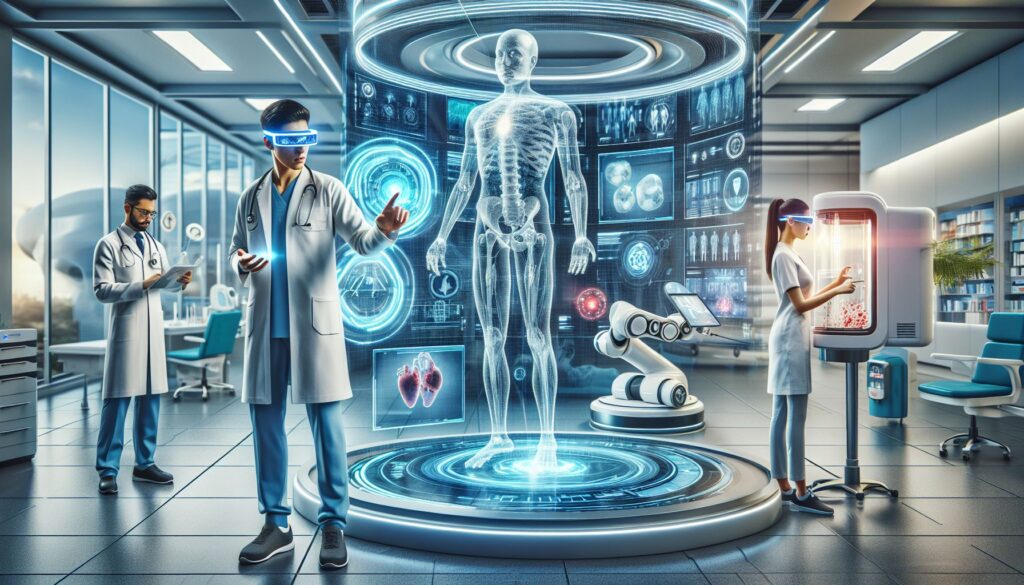
Imagine a world where medical diagnoses are reached within minutes, patient records are accessed with a simple click, and surgeries are performed with robotic precision. This is not a scene from a science fiction film; it’s today’s reality, thanks to cutting-edge technologies permeating healthcare. In the US alone, information technology related to the healthcare sector could save the economy $300 billion yearly, according to research from McKinsey & Company. Moreover, the digital health market is expected to reach $379 billion by 2024, growing at an annual rate of over 25%, as Statista reports. Keep reading, and you’ll uncover how technology is revolutionizing healthcare, from nuanced gadgets to overarching systems that redefine patient care.
Transforming Patient Care with Digital Solutions
In the fast-paced rhythm of modern life, the reliance on digital technology for convenient, sophisticated healthcare solutions is rising swiftly. Telemedicine is one of the most significant breakthroughs reshaping the patient-doctor dynamic. By unleashing the power of video conferencing and remote monitoring, healthcare providers can consult and treat patients hundreds of miles away. This is not only democratizing healthcare access but also slashing the costs and time associated with traditional office visits.
Electronic health records (EHRs) embody another colossal leap forward. Seemingly mundane, EHRs play a crucial role in unifying patient data across different healthcare settings. With instant access to a patient’s history, allergies, and previous treatments, clinicians are able to make timely, informed decisions with the assurance that they have a comprehensive view of the patient’s health.
Artificial Intelligence and Machine Learning
Delve into artificial intelligence (AI), and you’ll be greeted by an assortment of marvels poised to revolutionize healthcare. AI in medical imaging, for instance, empowers radiologists by speeding up image analysis and identifying patterns unseen by the human eye. Imagine learning of a cardiac issue, thanks to a machine learning algorithm that spots the initial, near-invisible signs of a future problem. The potential for AI to preemptively strike against diseases is one of the most staggering developments in modern healthcare.
Furthermore, AI-driven predictive analytics or machine learning extensions into genomics allow healthcare professionals to offer personalized treatment plans based on a person’s genetics. This means treatments are becoming more efficient, reducing side effects, and increasing the chances of successful outcomes.
Robotics and Surgial Precision
Robotics is another game changer stirring the healthcare realm with both intrigue and ingenuity. Robotic surgery, ever so popular, enables surgeons to perform complex procedures with enhanced precision, flexibility, and control. Da Vinci Robot, an impressive name on the robotic armory, gives surgeons an unrivaled 3D view of the operating site. The result? Less invasive procedures, reduced recovery times, and improved patient outcomes. It’s notable to mention that not only are total surgical procedures expected to surpass 1.2 million yearly, but also, the growth in the medical robots market signals an increasing trust in these technological wonders.
The Impact of mHealth and Wearable Devices
Welcome to the age where smartphones and wearable devices have turned into personal health assistants. Mobile health (mHealth) applications are abundant, monitoring physical activity, reminding individuals to take their medication, and enabling them to track their health stats in real time.
Wearable devices catapult this convenience even further. Anyone can check critical health indicators like heart rate and blood sugar levels simulating a personal check-up 24/7. High-tech wearables have also moved past just fitness tracking; innovators have crafted wearables that can detect impending heart attacks, monitor glucose continuously without a finger prick for diabetics, and even measure blood oxygen saturation – key in managing COVID-19 patients.
Unlocking Innovation Through Blockchain and Cybersecurity
Imagine patient data breaches as a thing of the past. This could become the standard with blockchain technology fortifying the integrity of healthcare data. Even more promising is the capability of blockchain to establish transparent, incorruptible, and secure health data exchanges. While it may seem like the realm of cryptocurrencies, blockchain’s ledger-like structure could allow healthcare providers to access immutable patient records – guaranteeing reliability and trust.
Yet, with any technology implementation comes the salient issue of cybersecurity. Medical devices and patient data are juicy targets for digital threat actors. Hence, the surge in developing state-of-the-art cybersecurity measures forms the backbone of all health-related technologies, ensuring every advancement is secure from malevolent cyber intrusions – a crucial step to winning patient and provider confidence.
Globally Connected Systems and Interoperability
Interconnected data systems shine within the healthcare communication network. Rather than each institution fighting ailments with its own arsenal, interoperability enables seamless interaction among different information technology systems, applications, and platforms.
Such interconnectivity ensures that valuable patient information doesn’t get confined within the walls of a single hospital or practitioner’s office but is available across the healthcare spectrum, empowering collaborative and comprehensive patient care. Tapping into shared repositories of medical data can drastically reduce test repetition, grant prompt access to patients’ medication histories during emergencies, and support more cohesive, holistic care management/coordination.
Bridging the Gap with Virtual Reality and Augmented Reality
Step into a different dimension —reality augmented (AR) or virtual (VR), building profound inroads into healthcare education and treatment. From guiding aspiring surgeons through complex procedures in a risk-free environment to helping patients hands-on recovery after a stroke, these immersive technologies hold the promise of unprecedented advancements. VR serves in pain management, virtually transporting patients to serene landscapes, thereby reducing the reliance on painkillers. Its educational prowess is found in medical schools, where it enables students to perform ‘surgery’ in a completely controlled, yet remarkably real environment. Meanwhile, AR projects holographic imagery into the surgeon’s field of view during an operation, building a bridge of synergy between real and digital worlds to facilitate precision and insight.
Conclusion and Looking Forward
Health technology propels healthcare into a realm filled with extraordinary promise, fueled by innovation that keeps the person at its core. Combating illness is becoming an avant-garde experience that leans on a blend of innovation, cyber ingenuity, and amplified human touch. Gone are the days of passive patients and dogmatic methods. Welcome, instead, to a vibrant, connected, technology-laden future that brings the ultimate in personalized, efficient, and preventative care. Refuse to be confined by geography or means; anticipate health monitored proactively with sophisticated allies. Bid farewell to convoluted data records, privacy anxieties, and isolated medical ecosystems. A digitized healthcare universe is under construction, radically shifting how treatments are proposed and life-altering decisions made. Stay keen and witness the birth of a modernized healthcare saga.