
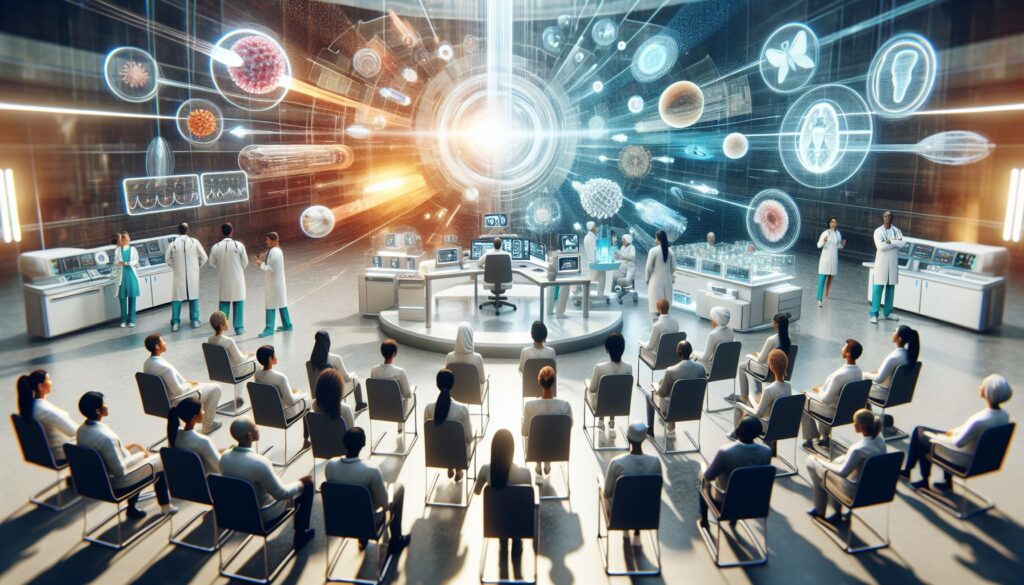
The realm of healthcare is witnessing a revolution, catalyzed by groundbreaking innovations that have the potential to significantly enhance patient outcomes and streamline healthcare processes. In a striking reflection of progress, recent studies indicate that the digital health market alone is expected to soar to $509.2 billion by 2025, expanding at a CAGR of 27.7%. This eye-opening statistic illustrates the formidable impact of technological advancements in reshaping healthcare dynamics. This article delves into the pioneering changes revolutionizing the healthcare industry, offering a glimpse into a future where health and tech walk hand in hand towards better, more accessible care.
The Intersection of Tech and Medicine
Making Informed Decisions with Big Data Analytics
The magnitude of data generated in healthcare is stunning, but its real value lies in the ability to decode and utilize this data to shape patient care and outcomes. Big data analytics employs complex algorithms and software to process vast amounts of disparate data in healthcare settings. This innovation enables professionals to uncover life-saving insights, predict epidemic outbreaks, personalize treatment plans, and optimize operational efficiencies—ultimately reducing costs and improving patient experiences.
Digital Twins: Personalized Treatment Plans
Imagine a digital replica of patients that can simulate the progression of their diseases or response to treatments. Digital twins, a concept borrowed from sectors like manufacturing, are now a healthcare reality. By using patient-specific data models, physicians can predict complications, plan surgeries with pinpoint accuracy, and even anticipate an individual’s response to treatment. This could spell a transformative era in personalized healthcare and drastically reduce trial and error in treatment courses.
Tech-Enhanced Health Monitoring Devices
Continuous Health Monitoring with Wearables
The growth of wearable technology is a prominent feature of today’s healthcare landscape. Devices like smartwatches, fitness trackers, and even smart clothing have biometric sensors that offer real-time patient data—heart rate, blood oxygen levels, and sleep patterns—directly to healthcare providers. With continuous passive data collection, these devices have the power to detect abnormalities that signal the onset of a medical episode, empowering early intervention and furthering preventative healthcare.
Realizing the Potential of Remote Health Interventions
In the wake of the 2020 pandemic, telehealth surged to the forefront as a critical component in delivering healthcare while maintaining social distancing. But the innovation hasn’t stopped there; virtual reality (VR) and augmented reality (AR) technology have expanded the reach and efficacy of remote care. VR headsets are being trialed in pain management and rehabilitation to provide immersive experiences that help manage chronic pain and recover motor function following a stroke. AR glasses allow for remote practitioners to guide intricate procedures from miles away. This telepresence capability paves the way for vast improvements in global healthcare equity and access.
Artificial Intelligence and Machine Learning in Healthcare
Diagnostic Improvements with AI-Powered Tools
Artificial Intelligence (AI) allows clinicians to harness computer algorithms to interpret complex medical data unscaled. AI has the proficiency not just to analyze medical imagery better than human counterparts do, but also provides decision support systems for less error-prone diagnosis and treatment plans. The impact is considerable — including significant reductions in false negatives or positives in detecting conditions such as cancer, ultimately saving lives and critical healthcare resources.
Machine Learning to Predict Health Trends
Machine Learning (ML), a subset of AI, uses patient data to identify patterns, predict outcomes, and make evidence-based recommendations. These systems get smarter over time, learning from each data packet to build models that forecast everything from flu spikes to individual patient illness trajectories. Delved into a wealth of data from countless hours of patient care, machine learning can swiftly assimilate the ingenuity across decades of healthcare into every decision it makes.
Revolutionary Platforms and Ecosystems
Synergy with Blockchain for Secure Healthcare Data Exchange
Concerns revolving around sensitive data exchange can hinder healthcare effectiveness. Blockchain technology promises to reinstate this trust. It decentralized, encrypts, and tracks each transaction to ensure the integrity and history of exchanged data, offering a secure exchange while maintaining patient privacy. Furthermore, it enables patients to have ownership of their health data, potentially transforming the traditional dynamics between patients and healthcare entities.
Integration through Application Programming Interfaces (APIs)
Modern healthcare cannot survive as isolated systems and practices; the integration of electronic health records (EHRs) through Application Programming Interfaces (APIs) reduces information silos and accelerates the seamless exchange of crucial health information across the care continuum. By standardizing the “conversation” between disparate healthcare systems and applications, APIs foster an ecosystem where software can easily “talk to each other,” providing a smoother healthcare experience for patients and efficiency gains for providers.
Harnessing the Connectivity for Improved Outcomes
Bridging Healthcare’s Interoperability Gap
Healthcare interoperability—the ability of different information systems and software applications to communicate—remains a significant challenge. Innovations focusing on seamless information exchange promise to ameliorate these barriers, ensuring that patient information is accessible to the appropriate parties when needed, without compromise to quality or security. This communication fluidity is key to delivering coordinated and comprehensive care, especially for patients with complex or chronic conditions.
The Benefits of Innovation: A Look at Statistics
The impacts of healthcare innovation stretch far and wide, reflecting in statistics that measure both human and economic gains. For example, research has shown that AI applications could potentially lead to savings in healthcare costs by reducing expensive diagnostic errors and optimizing treatment efficacy. According to a report from the American Medical Association, the integration of clinical insights derived from EHR data has been linked to a significant decrease in emergency room visits—illustrating the tangible outcomes innovation can bring about in emergency medicine.
Advancing Towards an Equitable Health Future
The unmistakable stride in innovation hints at a dawning age where healthcare transition from a scattergun to a precision force. Each breakthrough empowers a more nuanced understanding of human health and elucidates pathways to accessible, efficient, and superior healthcare. As doctors emplace tech as their ally, the envisioned frontier is a diligent blend of professional competence and technological prowess, reshaping healthcare into an arena that not only heals but anticipates and prevents.
In keeping stride with these technological leaps, may become better informed, proactive participants in the sphere of health—and as the walls between countries collapse under the weight of digital innovation, the portrait of global health can morph into one of universal triumph over illness and infirmity. The charge is led by innovation, and it’s transforming lives, one pioneering step at a time.