
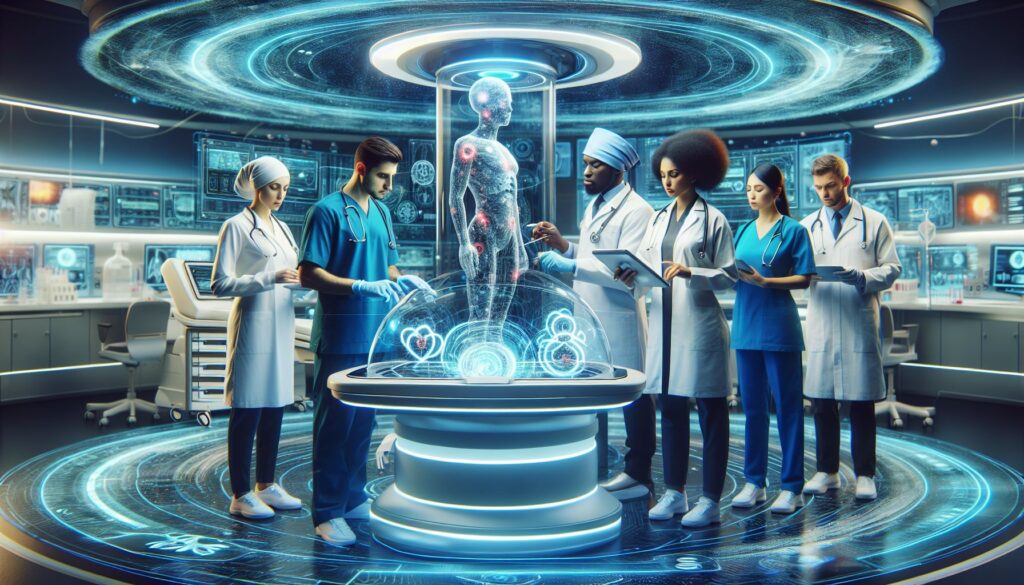
Introduction
In the constantly evolving landscape of health and wellness, innovations in healthcare technology have initiated a renaissance in the way you receive medical treatments and healthcare services. With the advent of cutting-edge tools and advanced methodologies, this transformation is leading to more personalized, efficient, and effective care. The numbers are as promising as they are staggering – the global digital health market was valued at approximately $96.5 billion in 2020 and is projected to reach over $295 billion by 2028, growing at a CAGR of 15.1% from 2021 to 2028.
A New Era of Diagnosis and Treatment
Imagine walking into a clinic where robotic surgical arms await, ready to perform a complex operation with unparalleled precision. This isn’t a scene from a sci-fi movie, but a reality in many developed healthcare systems today. Robot-assisted surgery, fall detection technology, and AI-powered diagnostic tools are just a few examples of what’s propelling healthcare into a future that was once mere fantasy.
Artificial intelligence (AI), particularly, has been a game-changer. Machine learning algorithms can now process and analyze vast amounts of data to aid in early disease detection. For instance, AI systems are being trained to spot potentially cancerous lesions in mammograms with a higher degree of accuracy than the human eye.
Moreover, virtual reality (VR) is being utilized as a revolutionary tool for both patient treatment and medical training. It allows for immersive therapy sessions for patients with PTSD or anxiety disorders, as well as simulating complex surgeries for training students without risking patient safety.
Remote Care and Telemedicine
With facile internet access, telemedicine has shown immense growth, connecting you to healthcare professionals irrespective of geographical barriers. Synchronous video calls with doctors allow remote consultations, postoperative follow-ups, and basic care delivery, significantly cutting down on travel time and exposure to hospital environments, an especially pertinent advantage in times of viruses like COVID-19.
Mobile health (mHealth) applications are also flourishing, empowering you with real-time health monitoring. From wearable health trackers to specialized devices, the real-time collection of health metrics is allowing a proactive approach to health management, contributing to a considerable impact on chronic disease management.
Another innovative breakthrough in remote monitoring is the advent of smart pills. These ingestible devices can monitor your gastrointestinal health, sending critical data to your physician, and ensuring prompt and accurate intervention.
Personalized Medicine and Genomics
Stepping into the realm of genetics, personalized genomics and medicine bring the promise of treatments tailored specifically to your genetic makeup. With advancements in genetic sequencing technology, profound strides in understanding specific variations in diseases, and how they react to different treatments, are paving the path toward incredibly targeted care strategies.
An excellent example is cancer treatment. Understanding tumor gene mutations allows the development of individualized oncology drugs aimed at those precise mutations, reducing side effects and improving overall effectiveness.
Personalized medicine’s growth couples with innovations like CRISPR gene editing, promising treatments for genetic diseases once considered incurable by literally modifying your DNA.
Medical Data and Cybersecurity Enhancements
The digitization of health records was only the beginning; now medical data can provide actionable insights which were previously indiscernible. With the allure of big data comes the undeniable need for rigorous cybersecurity measures. Advances in encryption and blockchain technology are protecting your life-sustaining data against cyber threats and ensuring HIPAA compliance and patient privacy is maintained.
A deep dive into statistics underscores the importance of data security in healthcare. According to recent findings from a cyber research team, health care data breaches have been on the rise, affecting over 26 million people in the United States alone in 2021, demonstrating the grave necessity for robust cybersecurity in the face of escalating digital health solutions.
Furthermore, Interoperability in IT systems makes certain a holistic and seamless exchange of medical information, advancing coordinated care and ultimately enhancing patient experiences and outcomes.
The Age of Wearables and Implants
Wearable healthcare technology extends beyond fitness trackers into genuine medical devices that track vital signs, record sleep patterns, and even manage pain through electrical stimulation. Research predicts that the global wearables market, which includes smartwatches, smart clothing, and fitness trackers, is expanding vigorously – with an expected growth to over $67 billion by 2025, at a CAGR of 19.6% from 2020 to 2025.
Implant technology is undergoing transformative innovations as well, with breakthroughs like Internet of Medical Things (IoMT)-enabled implants that can monitor and wirelessly report on various health metrics or medication levels inside the body, delivering unparalleled monitoring capabilities and patient care.
Healthcare Accessibility and Affordability
Technological innovation also plays a pivotal role in addressing healthcare accessibility issues. Technologies like 3D printing are giving rise to more affordable prosthetics, dental devices, and even medical equipment accessible to a larger population. Meanwhile, portable diagnostic tools enable frontline health workers to deliver care in far-flung communities that might otherwise go underserved.
In countries with dense populations and strained health resources, innovations such as app-based diagnostic guides give community health care providers the tools to offer basic but urgent medical advice.
Inclusion of AI-Steered Health Decisions
Healthcare decisions are becoming more data-informed than ever before. AI and predictive analytics assimilate historical data with current patient data streams, enhancing healthcare provider’s decision-making by projecting future health outcomes. This proactive approach mitigates potential health scares, revolutionizing emergency care and ICU responsiveness with advanced monitoring and early-warning systems.
As you can witness, technological innovation in healthcare doesn’t merely modify existing treatment protocols; it reimagines potential futures free from the constraints of traditional medicine. Access to health services has never been as straightforward, individualized, or intuitive. With continuous improvement and revolutionary leaps in healthcare technology, a future of optimal wellness tailored to individual needs seems not only possible but imminent. As these technologies mature and integrate further into everyday medical practice, the emphasis will likely shift to education, training, and ensuring equitable access scales alongside these technological advancements – a challenge but also an exhilarating prospect for global health and well-being.