
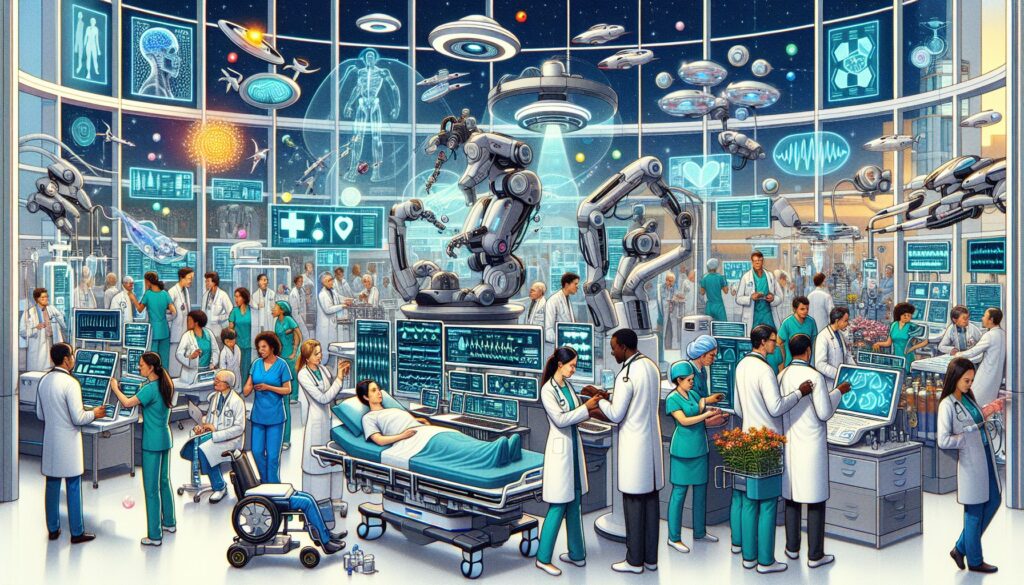
Welcome to a journey through the revolutionary realm of healthcare transformations, where leaps in technology and cutting-edge innovations are redefining the frontiers of medicine. These changes come not a second too soon; according to the World Health Organization, chronic diseases are on the rise, predicted to account for 73% of all deaths globally by 2020. It’s a race against time and an uphill battle against cost, accessibility, and quality in treatment and prevention of diseases. Explore how modern advancements are creating a promising future, bolstering hopes and increasing expectancy in patient outcomes.
The Digital Revolution: Telemedicine and E-Health
Imagine receiving high-quality healthcare advice without leaving your home. Telemedicine does just that by enabling patients to seek medical advice and consultations through digital means. The ability to virtually connect with healthcare professionals breaks barriers in access for those living in rural or underserved areas, significantly bridging the gap in healthcare disparities.
Real-time video conferencing, mobile health apps, and remote patient monitoring systems are quintessential examples of telemedicine’s roaring success. These practices are not shy of producing solid results, evidenced by the marked improvement in patient engagement and chronic disease management. Convenience aside, digital record-keeping through e-health platforms brings unimaginable efficiency and accuracy to medical databanks, paving the way for informed decision-making.
The Power of Personalization: Precision Medicine
What if treatment schemas were tailored made to fit the unique genetic fabric of each individual? Precision medicine captures the essence of such a notion. Today, the personalization of healthcare can tap into one’s genetic information to forge treatment plans that are as individual as one’s DNA. Diseases like cancer, particularly, see a brighter ray of hope as oncologists turn towards gene sequencing to personalize chemotherapy and immunotherapy treatments.
This fine-grained tailoring of medicine not only positions the efficacy of treatments under a far more favorable light but also helps in pre-emptively identifying those at higher risks of certain diseases, offering life-saving preventative strategies that are nothing short of revolutionary.
Stepping into the Future with Surgical Robots
The realism of robots conducting surgery might seem like a cut straight out of a science fiction screenplay, but it stands true today as one of the finest – and tangible – displays of healthcare innovation. Robotics in surgery promises precision beyond human capacity, making procedures minimally invasive, which translates to shorter recovery times and lesser risk of infection.
Complex surgeries, especially in areas with limited space like neuro or heart surgery, reap the benefits of such robotic assistance. Assistive robots don’t replace surgeons, they work under the surgeon’s command, mirroring their movements on a smaller, more precise scale. Every cut, stitch, or movement is finessed through the metal precision of robotic hands, often leaving patients with smaller marks than traditional methods would consider.
Wearables and Implants: Monitoring Health at Every Tick
In this era of quantum technological leaps, convenience is king – wearable health devices unleash fascinating possibilities across this realm. Tracking heart rates, sleeping patterns, caloric intake, and more, these smart gadgets paint a comprehensive data set over one’s overall health. For an afterthought, consider the magnificent strides wearables have achieved in diabetes management through continuous glucose monitoring systems, substantially easing daily tribulations for those afflicted.
In addition, the rise of sensor-based implants reports on health metrics from within, offering round-the-clock data analysis outside the constraints of a hospital setting. This continuous stream of medical data fine-tunes disease management, allowing for the necessary adjustments in medication or lifestyle before conditions exacerbate.
Statistics Underlining Healthcare Innovations:
Adorned with nothing less than statistics, the potency of these innovations reveals itself. Research distribution on healthcare technologies indicates substantial growth; predictions from industry report suggest that the telehealth market itself is expected to surge by a compound annual growth rate (CAGR) of 14.9% from 2020 to 2025. In the firmament of wearable tech, 245.4 million devices were shipped worldwide in 2020 alone, showcasing immense faith and dependence laid upon them by users globally.
Even robots hold their ledge; the global surgical robot market anticipates a colossal leap to $24.6 billion by the close of 2025. Though at first glance these might seem mere numbers, drilled down, they speak of the millions given the new dawn of hope, trials turned to testimonies, all under the banner of evolving healthcare.
Culmination: Blockchain in Healthcare
Amidst the relentless sequence of modern healthcare breakthroughs lurks the promise of yet another prendre la scène – Blockchain. Adored for its intrinsic traits of transparency, decentralization, and security, blockchain assures an impregnable fortress around the very core of healthcare – patient records. They cease being mere files and transform into ‘blocks’ stocked with immeasurable patient history worthy more than digital gold, carrying an ungarnished aura of confidentiality and integrity.
Surpassing the conventional, blockchain also promises refinement in managing pharmaceutical supply chains, combating counterfeit drugs, and streamlining health insurance claims, rooting out inefficiencies and instilling truth where misattribution once might’ve thrived.
Revving Up Vital Investment for Sustained Innovation
Let’s knit the narrative with a nod towards an inalienable force behind the continual tread of innovation – investment. Grappling with capex heavy machinery, training, research, and development is no minor econometric variable, but rather an indispensable element sustaining the echelons within healthcare innovation.
These monarchs of risk enable innovators to carry through conceptual blueprints into material change, while agencies and governments shower prudent incentives to stoke the engine of passionate undertakings. Investment, here, becomes not just monetary input but rather the kindling of ventures pushing the boundaries of conceivable healthcare delivery.
Reflecting on the Impact of Innovation
Lastly, while feverishly admiring the strides in healthcare innovation, pause taken to reflect upon their impact is essential froth. Sailing through pandemic highs and lows exposes how vital such technological advancements have been, carving out the capacity for healthcare systems to endure unprecedented demand. Their animation has come as no less than an absolution, reinforcing the healthcare industry’s resilience when mere evasion would fall flat.
Remarked is an ever-growing cohort of patients empowered with remote and personalized services – a quilt much desired for its warmth in unsettling times. The panoramic view of innovation in this sector offers the unimaginable and delivers well beyond that. It fabricates an ecosystem where every life, irrespective of demographic divide or aliment severity, can conjoin in benefit, truly capturing the ethereal sense of an equal opportunity of health for all.
In parting footnotes, any technology, however magnificent, garners its luster from its patrons. Embrace the wealth of advancements, notions reshaping, continue to relentlessly advocate for the intervention technology passion relentlessly brings to the beating tables of innovation – for it’s a dance of evolution that ensures the threads of health remains tethered to the humankind’s march forward.