
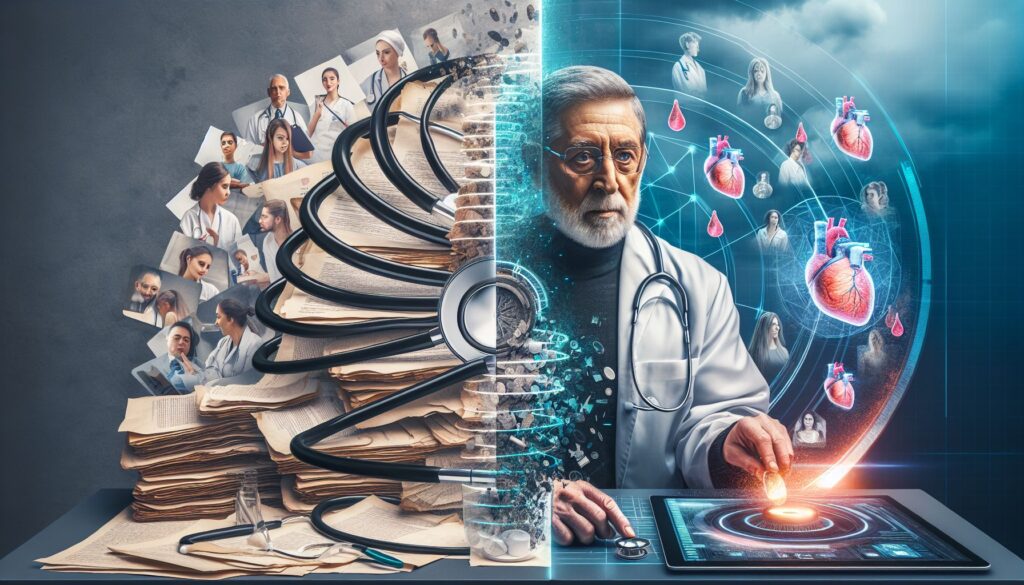
Welcome to an exciting journey through the landscape of healthcare innovations, a field that is rapidly transforming the ways in which healthcare is delivered and experienced. Imagine a world where recovery is quicker, diagnoses are more accurate, and treatment is precise and personalized. That’s the promising horizon unfolding thanks to groundbreaking advancements in medicine and technology. With numerous studies showing significant gains in recovery times and patient outcomes due to healthcare innovations, it’s no wonder that this surge is generating global attention. One report by the Congressional Budget Office noted that between 10 to 50 percent of improvements in health outcomes over the past few decades can be attributed to advances in medical technologies.
Harnessing the Power of Data and AI
One area where healthcare is witnessing a transformation is the utilization of big data and artificial intelligence (AI). Healthcare platforms are increasingly incorporating these elements to make sense of the vast amounts of data generated. The application of AI in diagnostic procedures, for example, has seen algorithms outperform humans in certain tasks, such as detecting retinal diseases and differentiating between benign and malignant tumors with incredible accuracy.
Moreover, personal AI health assistants are now on the rise. These virtual aides learn from individual medical history and current health data to provide personalized advice, adhere to medication protocols, and act as an automated liaison between patients and professionals, ensuring timely care and intervention.
The Age of Telemedicine and Remote Monitoring
The advent of telemedicine represents a seismic shift in patient care. It’s now possible to consult with a healthcare professional, get a diagnosis, or even have a follow-up appointment from the comfort of one’s home. The benefits are far-reaching, including increased access to healthcare services for people in remote locations, reduced exposure to hospital-acquired infections, and significant cost savings.
Remote patient monitoring (RPM) has further redefined healthcare delivery. Chronic illnesses such as diabetes, heart diseases, and respiratory conditions are managed more efficiently as wearable devices continually transmit patient health data to healthcare providers. This proactive approach significantly improves the ability to make timely adjustments to treatments and can lead to better management of chronic conditions.
Breakthroughs in Genomics
Another fascinating frontier in healthcare innovations is genomics. With the decoding of the human genome, it has become possible to deliver precise medical interventions. Genomic medicine has enabled strides in fields such as oncology, where genomic data is used to customize cancer treatments based on the genetic makeup of both the patient and the tumor. The age of “one-size-fits-all” treatment is giving way to bespoke and effective regimens, improving survival rates while minimizing adverse side effects.
Revolutionary Therapeutics and Biotechnology
The Biotech sector has been equally groundbreaking in its contribution to innovative therapeutics. CRISPR and gene editing technologies have transformed the trajectory of genetic diseases, providing the tools to potentially ‘cure’ previously untreatable conditions. Additionally, the rapid development of mRNA vaccine technology has proved transformative, particularly highlighted by its pivotal role in the development of COVID-19 vaccines, marking a new era in vaccine design and responsiveness to global healthcare crises.
Impact of Healthcare Innovations: A Statistical Overview
On the statistical side, the impact of healthcare innovations cannot be overemphasized. In recent years, digital health ventures have significantly risen, with investments surpassing $8.1 billion in the US alone as of 2019. Moreover, the FDA’s approval of novel drugs has risen up considerably, with roughly 48 new drugs approved in 2019 compared to 22 in 2010. These numbers reflect not only a surge in healthcare innovation but also disruption in drug development strategies towards more targeted therapies, which hold the promise of better patient outcomes and narrower treatment pathways tailored to individual needs.
Challenges and Ethical Considerations
With the rapid emergence of new technologies in healthcare, equally critical is the awareness of challenges and ethical concerns brought about by these innovations. Privacy concerns, security of health data, and equitable access to these new technologies are of paramount importance. Similarly, the ethical implications of gene editing and AI decision-making in healthcare require careful consideration, with policies and regulations constantly evolving to keep pace with technological advancements.
Pioneers Pushing the Boundaries: Innovative People in Healthcare
The momentum of healthcare innovation heavily relies on visionary thinkers and leaders. From Elizabeth Holmes, once heralded as a prodigy for her role in the establishment of Theranos – despite its later demise due to integrity issues – to pioneers like Shafi Ahmed, a surgeon revolutionizing medical education through virtual reality, there is no shortage of inspirational figures shaping the future of healthcare. Innovators such as Dean Kamen, inventor of the first drug infusion pump, continue to forge pathways towards novel medical devices and interventions that can address complex health problems.
Integrating Patient-Centered Care in Innovations
Underlying all these advancements is the tenet of patient-centered care, the foundation upon which healthcare delivery should be built. Innovations are continuously aligned to not only improving health outcomes but also enhancing patient experiences. This includes solutions tailored for diverse geographic, socio-economic, and individual patient factors, ensuring healthcare is accessible, respectful of individual patient preferences, and responsive to their needs and values.
Final Thoughts: A Bright Future for Healthcare Innovation
In the end, healthcare innovations are not just about flashy gadgets and sophisticated software. They speak to the very essence of medical care, where advancements in science and technology shape a future that is more humane, caring, and ingenious for all involved. These innovations are creating an exciting narrative filled with possibility and potential—a story where, regardless of location or condition, every individual stands to benefit from a healthcare system that values precision, efficiency, and personalization. You’re living in an era brimming with medical marvels and incredible leaps forward. Embrace the many roles they can play in shaping a healthier, more resilient society for decades to come.