
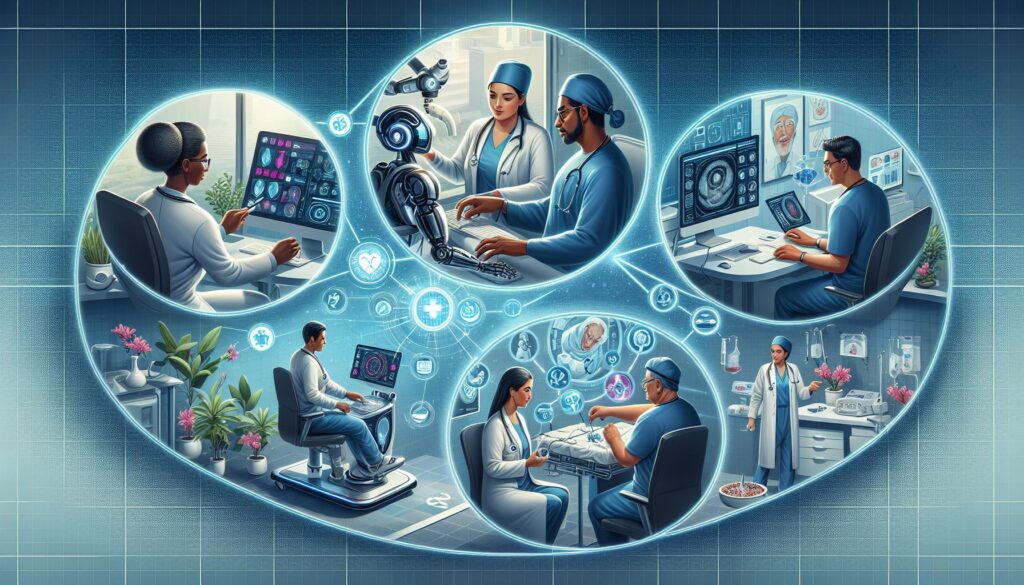
In recent years, healthcare innovation has seen an unprecedented surge, reshaping how patients receive care. With medical technology advancing at breakneck speed, accessing accurate statistics is crucial to understand how the landscape of healthcare is changing. Recent research indicates that approximately 70% of medical decisions depend on diagnostic testing, which technology continues to revolutionize. Furthermore, investment in digital health reached an astounding $14.6 billion in 2020, highlighting the eager anticipation for innovative solutions that drive forward healthcare systems worldwide.
Transforming Diagnostics and Treatment Plans
The Advent of AI and Machine Learning
One of the most significant leaps in healthcare innovation has been the rise of artificial intelligence (AI) and machine learning. Computer algorithms can now diagnose certain conditions just as accurately — if not more so — than the average clinician. They sift through massive datasets to predict patient outcomes, personalize treatment plans, and even assist in routine tasks, thereby reducing the likelihood of human error and increasing the quality of care that patients receive.
AI’s revolutionary nature lies in its ability to learn from thousands of patient records in mere seconds, performing diagnostic tasks at a speed no human can match. For instance, AI algorithms analyze chest X-rays much quicker than radiologists would themselves, and with astonishing precision, identifying patterns imperceptible to the human eye.
Precision Medicine and Genomics
Personalization is positioned at the forefront of current healthcare innovations. Precision medicine has emerged as a practice that tailors medical treatment to the individual characteristics of each patient. By integrating data from genome sequencing with an individual’s lifestyle and environment, healthcare providers can prescribe prevention strategies and treatments that are highly personalized and effective.
Moreover, the integration of genomics into regular care could soon enable treatments and prevention strategies that are tailored down to an individual’s very DNA, thus significantly enhancing the efficacy of therapeutic interventions.
Enhancing Patient Experience with Telehealth and Remote Monitoring
Overcoming Geographic Barriers with Telemedicine
Telemedicine has revolutionized patient experience, by making medical consultations accessible from the comfort of home. Particularly in rural areas where healthcare facilities may be several miles away, virtual appointments shatter geographical barriers, allowing routine follow-ups, prescription management, and initial consultations to be conducted with ease.
Importantly, telehealth isn’t just about convenience; it’s about extending the reach of medical services to underprivileged or underpopulated areas. This expansive accessibility has led to a satisfying leap in the continuum of care, always guaranteeing that care remains patient-centered.
Real-time Health Tracking Through Wearables
The proliferation of wearable technology has moved beyond mere fitness tracking – numerous devices can now monitor blood sugar, blood pressure, and other vital signs in real time. Chronic disease management significantly benefits from this as it allows for continual monitoring without the frequent clinic visits, thus notifying healthcare professionals of troubling signs before they escalate into more dangerous events.
Imagine diabetic patients having their blood sugar levels monitored 24/7, immediately alerting them and their healthcare provider when levels stray from normal. This advancement is not just innovative but life-altering, as it promotes preemptive healthcare interventions and real-time responsiveness.
Accelerating Drug Discovery and Development
Speeding Up the Pipeline
Advancements in computational biology and chemistry are drastically accelerating the pace at which new drugs can be discovered and developed. Predictive models and high-throughput screening enable early identification of promising compounds, reducing the protracted periods typically associated with drug development. These innovations are crucial in fast-tracking the creation of new treatments for urgent medical needs.
For example, during the COVID-19 pandemic, technology propelled the speed of vaccine development to historical levels, delivering efficacious vaccines to market at an unprecedented pace. This rapid turnaround underscored not only the dire need but also the incredible potential for swift drug discovery and distribution when innovative technology is employed from the get-go.
The Ethical Component of Rapid Innovation
It’s also worth noting that rapid innovation in healthcare, particularly in drug development, invites ethical considerations. Navigating the fine line between speed and safety is crucial to ensure patients’ well-being remains at the core of innovation. It necessitates a collaborative effort of researchers, clinicians, and regulatory bodies to weigh the risks against potential life-saving benefits appropriately.
Boosting Healthcare Access and Efficiency with E-Health Records and Big Data
Digital Data and Cohesive Patient Care
Electronic Health Records (EHR) are a foundational element of healthcare’s digital transformation. EHRs promote cohesive patient care by creating comprehensive patient profiles that are easily accessible by any treating physician or specialist. Besides improving efficiency and communication across the healthcare spectrum, these digital records help prevent prescription errors, make valuable predictive analytics possible, and spur broader changes by facilitating largescale studies and research that influence policy decisions.
Through big data – sprawling collections of patient information – trends and patterns in patient health can impact global healthcare systems. Predictive analytics stemming from big data analysis enables health officials to anticipate disease outbreaks, allocate resources more effectively, and even forecast future healthcare needs.
Innovations Revolutionizing Surgical Procedures
Operative Precision with Robotics and 3D Printing
Robotic surgery has become increasingly precise, translating the surgeon’s movements into incredibly delicate maneuvers that manual operations can’t match. The precision of robot-assisted surgeries can mean less tissue damage, reduced recovery times, and better overall patient outcomes.
Adjacent to robotic assistance are the wonders of 3D printing in healthcare. Custom implants and prostheses, tailored accurately to an individual patient’s body thanks to 3D printing, have significantly improved patient compatibility and comfort. These bespoke solutions can often translate to quicker recoveries and better functional outcomes after surgeries.
Conclusion: Envisioning the Future of Healthcare with Innovation
The scope of healthcare innovation is colossal and growing by the day. Millions of lives are impacted in positive and profoundly transformative ways thanks to advancements like AI, telehealth services, precision medicine, and much more. With every new technological breakthrough in healthcare, the fundamental approach towards treating, preventing, and predicting disease shifts, inching the world closer to universally efficient, personalized, and accessible healthcare.
Embracing these innovations, whether you’re a healthcare professional, a patient, or a policymaker, means participating in a revolution with immense promise — a revolution that pledges not only to extend life but to vastly improve its quality. As the wearable monitors continue to hum quietly on patients’ wrists and AI systems analyze endless data streams, optimism for the future of medicine has never been more substantiated. The innovations making waves today spark imaginations for what’s possible tomorrow, catalyzing a continuous aspiration to overhaul healthcare for the better.