
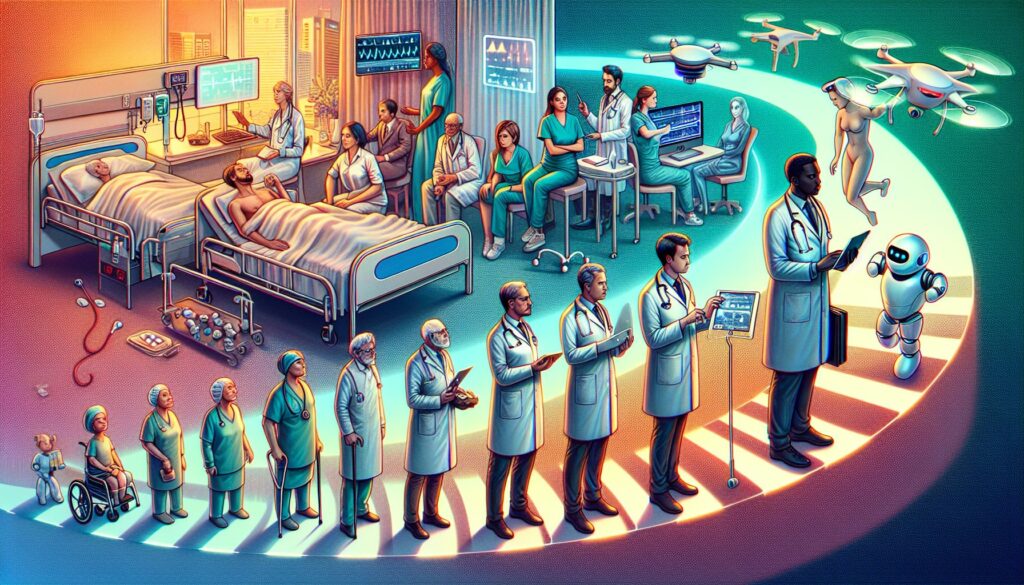
Healthcare is undergoing a dramatic transformation, thanks to a slew of groundbreaking innovations that are redefining wellness experiences. With an ever-increasing pace, new technologies and novel approaches to patient care are shattering traditional limitations, offering hope for unprecedented improvements in medical outcomes. Behind these rapid advancements is a driving force aimed at not just curing diseases but holistically enhancing life quality.
Embracing Technology for A Healthier Tomorrow
The Digital Revolution in Patient Care
In the realm of healthcare, the digital revolution has made waves, restructuring the way professionals approach patient care. From telemedicine to wearable devices, technology is enabling connectivity and data collection at a stunning scale—propelling the industry into a new era where informed data-driven decisions become the standard.
Telehealth has eased the way one receives medical advice, making consultations possible at the mere click of a button. The confines of geography have grown less restrictive, allowing patients, especially those in remote and underprivileged regions, to gain access to expertise once beyond their reach.
Similarly, the surge in mobile health apps and wearable devices is granting individuals the power to monitor their health more closely than ever before. Real-time data from heart rate to sleep patterns are empowering people and their care providers with pertinent information that can help preempt chronic diseases and fine-tune treatment regimens.
AI and Machine Learning: Smart Solutions for Better Health
Artificial intelligence (AI) and machine learning are arguably among the brightest stars in the healthcare innovation constellation. Pioneering the way care is administered, these technologies are enhancing precision medicine and enabling predictive analytics.
AI-powered algorithms can examine complex medical information much quicker than the human mind, spotting signs that can lead to early detection of illnesses such as cancer. Furthermore, machine learning’s ability to discern patterns in vast arrays of data is helping medical professionals understand disease progressions and outcomes in a way that was previously impossible.
The Statistics Backing the Digital Health Uprise
It’s telling that a 2019 study by Deloitte revealed that nearly 90% of healthcare executives plan to implement AI strategies, showing the sector’s commitment to innovation. Moreover, a report by PwC discovered that 39% of healthcare providers are betting big on AI, allocating budgets specifically drafted for emerging tech ventures.
These statistics strongly signify the fertile soil technology has found within healthcare—a domain historically seen as conservative but now at the forefront of digital proliferation.
Advances in Treatment: Crafting the Future of Cures
Genetics and Biotechnology: Personalized Medicine at Its Finest
Beyond the digits and devices exists an equally impressive series of advancements in treatments themselves. Genetic research stands out as a monumental aspect of contemporary healthcare innovation.
Gene editing techniques, specifically CRISPR/Cas9, have opened up realms of possibilities in treating genetic disorders. The power to alter DNA with high precision promises customized treatments based on an individual’s genetic makeup—a stone-cold leap into the era of personalized medicine.
Biotech companies are also developing responsive drugs fashioned to work exclusively with certain genotypes, attuning medication to one’s personal biochemistry, thus boosting efficacy and minimizing the risks of side effects.
The Role of Robotics: Surgical Precision Reimagined
Robotics in healthcare extends from logistical services in hospitals to complex surgical procedures. Precision surgery utilising robotic assisted devices showcases significant reductions in patient recovery time and scarring. The robots’ heightened dexterity, steered by veteran surgeons’ expertise, denotes less invasive operations, transformed operative outcomes, and heralds a new management scenario of postoperative care.
Expansion in Access and Affordability: Digital Pay Now Catches Up
One might ask how these leaps in innovation affect healthcare’s affordability and accessibility—crucial factors in a sector charged with public well-being. There is immense potential laid out. The use of algorithms and AI in diagnostics reduces costs by automating tasks that once required hours of highly specialized professional attention.
Technology is also ameliorating the connectivity between patient records and insurance practices, leading to tailored service pricing. Blockchain solutions, while still in nascent stages within healthcare, promise to create seamless transactions, eroding the thickets of bureaucracy that currently cloud healthcare billing.
Ethical Implications: Harnessing Innovations Responsibly
Though innovations hold great promise, they come bound to an array of ethical concerns. As machine learning algorithms are trained on datasets, there arises the essential need to ensure these data are free from biases that could lead to disparities in patient care. Ensuring the digital evolution in healthcare remains inclusive and fair is paramount for professionals and regulators facing these challenges.
Launching into the future of health requires a vigilant focus on information security and privacy. Technologies such as AI must be tightly regulated to maintain patient confidentiality amidst greater data sharing.
A Call to Action for Regulators, Providers, and Patients Alike
Healthcare providers undertaking the transition to digitized intervention must do so by carefully balancing the enticement of innovation against pragmatic constraints. Training for practitioners morphs into a necessity, as does public education to mitigate fears about new technologies.
Regulators should strive for clarity and concurrency with rapid development, setting safeguards in place that enable innovation without influencing ethical standards negatively. And for patients living in this day and age, it’s about practicing informed decision-making; leaning into the tide of digitization while echoing valid worries about privacy protections and the integrity of the patient-care provider rapport.
Conclusion: Charting A Path Forward
As the curtain rises on these innovation-led crusaders, the journey to wellness becomes an optimistic pave way aiming at resolute care that conserves humanity’s core values. Armed with technology, knowledge, and an unyielding spirit to conquer the clinical unknowns, frontline innovators propel healthcare into a bright future, promising healthier lives led not by chance but by brilliant, decisive intervention.
Healthcare stands at the crossroads of a digital renaissance marked by intelligence driven diagnostic procedures, unparalleled advancements in treatment, and a newfound charter of inclusivity. The continuous delve for innovation interlaced with technology embraces the core of modern medicine, pushing the boundaries of what’s conceivable to sketch the silhouette of tomorrow—a melody where each note accentuates the betterment of human condition.